
What is Asana?
With tasks, projects, conversations and dashboards, Asana enables teams to move work from start to finish.
Company Details
Need Assistance?
We're here to help you with understanding our reports and the data inside to help you make decisions.
Get AssistanceAsana Ratings
Real user data aggregated to summarize the product performance and customer experience.
Download the entire Product Scorecard
to access more information on Asana.
Product scores listed below represent current data. This may be different from data contained in reports and awards, which express data as of their publication date.
90 Likeliness to Recommend
96 Plan to Renew
87 Satisfaction of Cost Relative to Value
1
Since last award
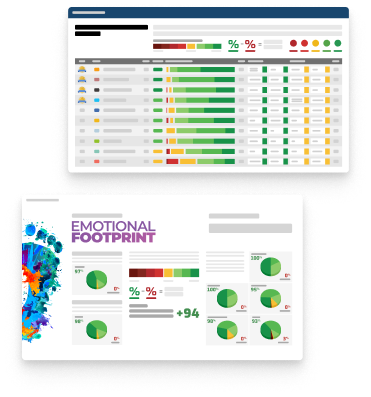
Emotional Footprint Overview
Product scores listed below represent current data. This may be different from data contained in reports and awards, which express data as of their publication date.
+94 Net Emotional Footprint
The emotional sentiment held by end users of the software based on their experience with the vendor. Responses are captured on an eight-point scale.
How much do users love Asana?
Pros
- Enables Productivity
- Fair
- Helps Innovate
- Reliable
How to read the Emotional Footprint
The Net Emotional Footprint measures high-level user sentiment towards particular product offerings. It aggregates emotional response ratings for various dimensions of the vendor-client relationship and product effectiveness, creating a powerful indicator of overall user feeling toward the vendor and product.
While purchasing decisions shouldn't be based on emotion, it's valuable to know what kind of emotional response the vendor you're considering elicits from their users.
Footprint
Negative
Neutral
Positive
Feature Ratings
Workflow Management
Product Management
Feature Management
ALM Integration
Backlog Management
Social Collaboration
Strategic Vision
Release Planning
Idea Management
User Needs Management
Visual Roadmap
Vendor Capability Ratings
Ease of Implementation
Business Value Created
Breadth of Features
Usability and Intuitiveness
Ease of Data Integration
Quality of Features
Product Strategy and Rate of Improvement
Ease of Customization
Availability and Quality of Training
Ease of IT Administration
Vendor Support
Also Featured in...
Asana Reviews

Bonnie B.
- Role: Information Technology
- Industry: Not for Profit
- Involvement: Business Leader or Manager
Submitted Jul 2026
Asana Saves Time and Protects Brain Cells
Likeliness to Recommend
What differentiates Asana from other similar products?
The UI for Asana is top notch as well as the automation functionality, and the fun celebrations make you want to keep coming back.
What is your favorite aspect of this product?
Honestly, Tab + B. The celebrations really do motivate me to keep going some days. Aside from those, the simple, clean UI. The depth and breadth of complex rules.
What do you dislike most about this product?
Reports and Dashboards need more complex filtering capability.
What recommendations would you give to someone considering this product?
Asana will not disappoint you. Your team will save an abundance of time and stop forgetting tasks.
Pros
- Performance Enhancing
- Enables Productivity
- Saves Time
- Reliable
Cons
- Vendor's Interest First
Please tell us why you think this review should be flagged.

Mahesh J.
- Role: Information Technology
- Industry: Engineering
- Involvement: IT Development, Integration, and Administration
Submitted Apr 2026
Powerful Project Organizer That Grows With Team
Likeliness to Recommend
What differentiates Asana from other similar products?
What really sets Asana apart and makes different from other project management tools is how it balances structure with flexibility. Unlike some tools that are very rigid (forced workflows) or too loose (just a list with no real tracking), Asana lets you organize work in multiple ways boards, timelines, lists, calendars so teams can choose what works best for them. That makes it feel less like you’re shoehorning your process into the software and more like the software actually adapts to how you work. It’s not always the simplest tool at first glance, but once you get past the initial learning curve.
What is your favorite aspect of this product?
My favorite thing about Asana is how it keeps everything organized without feeling overwhelming and I love that I can see my tasks in a list, on a calendar, or on a board depending on what I’m working on switching views is seamless. It makes juggling multiple projects way easier, and I never feel like I’m missing a deadline. I also really appreciate the way collaboration is built in. Tagging teammates, leaving comments, and attaching files directly to tasks makes communication super clear.
What do you dislike most about this product?
The thing I dislike most about Asana is that it can feel a bit overwhelming when you first start using it. There are so many features, views, and settings that it takes a while to figure out the best way to structure projects without overcomplicating things. For someone new, it’s easy to get lost in all the options, as it seems bit complicated. Another downside is that some of the more advanced features, like timeline dependencies or workload management, are locked behind paid plans.
What recommendations would you give to someone considering this product?
If someone is thinking about using Asana, I’d recommend starting with a clear idea of how you want to organize your work before jumping in. Take some time with the free plan to play around with different views list, board, and calendar to see what makes sense for your team’s workflow. Setting up a simple project first and inviting a few teammates can help you understand the basics without getting overwhelmed by all the bells and whistles.be honest about how much structure you need. Asana shines when you use it consistently, so having a basic plan for how tasks are named, how due dates are set, and how people check in can make a big differnce
Pros
- Continually Improving Product
- Enables Productivity
- Caring
- Saves Time
Please tell us why you think this review should be flagged.
Selene W.
- Role: Information Technology
- Industry: Technology
- Involvement: IT Development, Integration, and Administration
Submitted Feb 2026
Clear Operational Tracking
Likeliness to Recommend
What differentiates Asana from other similar products?
Asana stands out because it keeps complex work organized without feeling overly technical. For SRE teams coordinating across engineering, support, and operations, it provides a shared space to manage tasks and ownership. The structure is more flexible than traditional ticketing systems. That makes it useful beyond simple project planning.
What is your favorite aspect of this product?
The biggest benefit is clarity during multi team operational work. When reliability initiatives involve many moving parts, Asana helps ensure nothing gets lost between teams. Ownership, timelines, and progress remain visible. That reduces confusion during busy release cycles.
What do you dislike most about this product?
It may feel less specialized for SRE teams compared to tools built specifically for incident management. Some automation features require additional setup or integrations. Large workspaces can become cluttered without governance. Overall, it’s effective but works best with structured usage.
What recommendations would you give to someone considering this product?
Use it for operational planning, reliability improvements, and cross functional coordination rather than real time incident handling alone. Define consistent templates for recurring processes like maintenance or audits. Keep task ownership strict so accountability stays clear. With discipline, it becomes a strong operations management layer.
Pros
- Continually Improving Product
- Reliable
- Performance Enhancing
- Enables Productivity
Please tell us why you think this review should be flagged.



Get Instant Access<br>to this Report
Get Instant Access
to this Report
Unlock your first report with just a business email. Register to access our entire library.
© 2026 SoftwareReviews.com. All rights reserved.